
Crusoe Raises $3.9 Billion as AI Data Centre Investment Accelerates Across the United States

Crusoe Raises $3.9 Billion as AI Data Centre Investment Accelerates Across the United States
AI infrastructure company Crusoe has raised approximately $3.9 billion in equity funding, highlighting the enormous amount of capital now flowing into data centres and computing infrastructure as demand for artificial intelligence continues to grow.
The September 2026 financing reportedly valued Crusoe at approximately $27 billion before the new investment, according to Axios. The company has emerged as a major player in the rapidly expanding AI infrastructure market, working on data centres, GPU computing and energy infrastructure for some of the world’s largest technology companies.
The funding comes as technology companies across the United States continue investing heavily in the computing capacity needed to train and operate increasingly sophisticated AI models.
AI Creates a New Infrastructure Race
The rapid development of generative AI has created demand for enormous amounts of computing power.
Training large AI models requires thousands of specialised processors working together, while the growing use of AI applications is creating another challenge: providing enough computing capacity to process users’ requests in real time.
As a result, data centres have become one of the most important parts of the AI economy.
Companies including Microsoft, OpenAI, Meta, Google and Oracle are committing billions of dollars to new computing infrastructure, creating opportunities for specialised data-centre developers such as Crusoe.
From Energy to AI Infrastructure
Crusoe was founded in 2018 and initially became known for using otherwise wasted energy from oil and gas operations to power computing infrastructure.
The company’s business has since evolved significantly.
It now describes itself as an AI factory company, combining energy resources, AI-optimised data centres and cloud computing infrastructure.
Crusoe‘s expansion reflects a broader shift in the data-centre industry, where access to electricity and suitable infrastructure can be just as important as access to computing hardware.
Building Large AI Data Centres
One of Crusoe‘s most prominent projects is its large AI data-centre campus in Abilene, Texas.
Crusoe, together with Blue Owl Capital and Primary Digital Infrastructure, announced a multibillion-dollar joint venture to fund the development of the 1.2-gigawatt AI data-centre campus. The project has been associated with OpenAI’s expanding AI infrastructure requirements.
The development illustrates the scale of infrastructure being built to support the next generation of AI.
Large AI data centres require substantial investment in electricity, cooling systems, networking equipment, buildings and specialised computing hardware.
Demand Is Not Limited to Training AI
The next phase of the AI infrastructure market is increasingly focused on inference—the computing required when users interact with AI systems.
Training a model can require huge computing resources for a concentrated period, but once an AI system is deployed, millions of users can generate requests that must be processed continuously.
This is encouraging infrastructure companies to explore different types of data-centre deployments.
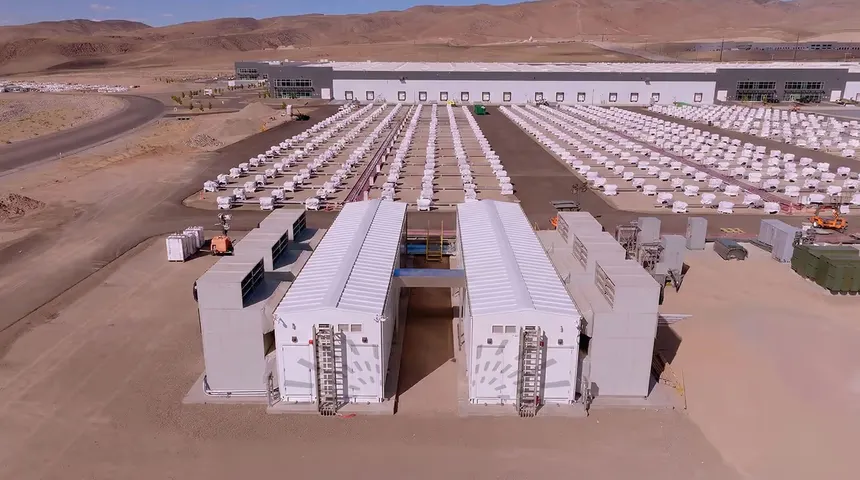
Recent reporting indicates that Crusoe is also developing smaller, modular data centres designed to be deployed more rapidly in locations where suitable power is available.
Modular Data Centres Become an Emerging Model
Crusoe‘s modular approach involves smaller prepackaged data-centre units that can potentially be manufactured and deployed more quickly than conventional large facilities.
The company has developed its Crusoe Spark modular data-centre concept, with production capabilities in Colorado.
The approach is intended to address some of the challenges facing the AI infrastructure industry, including lengthy construction timelines and the difficulty of securing suitable sites with sufficient electricity.
According to recent reporting, Crusoe is targeting substantial manufacturing capacity for these modular systems.
The Power Challenge
One of the biggest challenges facing the American AI industry is not simply the availability of chips.
It is electricity.
Modern AI data centres can require enormous amounts of power, putting pressure on electricity grids and creating demand for new generation and transmission infrastructure.
Data-cententre developers therefore increasingly need to consider power availability when selecting locations.
Crusoe‘s history of working with energy resources gives the company a distinctive position in this environment.
Its business model connects energy infrastructure with computing infrastructure, an increasingly important relationship as AI workloads become more demanding.
Billions Going Into AI Infrastructure
Crusoe‘s latest financing is part of a much larger investment wave.
The company had already secured a $1.375 billion Series E financing round in 2025, which valued it at more than $10 billion at the time. That round was co-led by Valor Equity Partners and Mubadala Capital.
The sharp increase in reported valuation and funding illustrates how quickly investor interest in AI infrastructure has grown.
However, the industry also faces questions about how quickly massive infrastructure investments can generate returns.
Technology Companies Need More Computing Capacity
Major AI developers are investing heavily in data centres because AI models require increasingly powerful computing environments.
The infrastructure includes:
- Advanced GPUs and AI accelerators
- High-speed networking systems
- Large-scale cooling infrastructure
- Power-generation and grid connections
- Data-centre buildings
- Cloud computing platforms
- Storage and security systems
Crusoe operates across several of these areas, giving it a broader role than a traditional data-centre landlord.
The Rise of AI Infrastructure Companies
The emergence of companies such as Crusoe represents a structural change in the technology industry.
Historically, computing infrastructure was dominated by large cloud providers and telecommunications companies.
The AI boom has created opportunities for specialised infrastructure companies that can provide computing capacity, energy and data-centre development services to AI companies.
Crusoe is one example of this new category.
Other companies are also seeking to build specialised AI data-centre capacity as demand for GPUs and computing power increases.
Environmental and Community Questions
The expansion of AI data centres is also generating debate over energy consumption, water use and local infrastructure.
Some U.S. communities are questioning how rapidly new facilities should be approved, particularly where large data centres could place additional demands on electricity and water resources.
In Silicon Valley, for example, proposed AI data centres have faced opposition from residents and environmental groups concerned about energy consumption, water use and pollution.
These issues are likely to become increasingly important as AI infrastructure expands across the United States.
The Economics of AI Infrastructure
The scale of Crusoe‘s latest financing demonstrates the capital-intensive nature of the AI industry.
Building data centres requires significant upfront investment, while projects can take years to develop and connect to power infrastructure.
Companies must also account for rapidly changing computing technology.
A data centre designed around one generation of AI hardware needs to remain useful as newer processors become available.
This creates additional pressure on infrastructure companies to design facilities that can adapt to changing computing requirements.
A New Phase for U.S. Technology Infrastructure
Crusoe‘s latest funding comes at a time when the United States is investing heavily in domestic AI infrastructure.
The competition is no longer limited to developing better AI models.
Companies are increasingly competing to secure the chips, electricity, data centres and networking systems required to operate those models at scale.
For Crusoe, the new capital provides additional resources to expand its infrastructure platform and pursue new opportunities in the growing AI economy.
The company continues to work on large-scale data centres while also developing smaller modular facilities designed for faster deployment.
Looking Ahead
The AI infrastructure market is likely to remain closely connected to developments in semiconductors, cloud computing, energy and data-centre construction.
Crusoe‘s $3.9 billion financing is another indication of the scale of investment flowing into this ecosystem.
As AI applications move from experimental tools into everyday business operations, demand for computing infrastructure is expanding beyond model training to include large-scale inference and real-time AI services.
For the United States, this means the AI economy is increasingly becoming an infrastructure story as much as a software story.
Companies capable of securing power, building data centres and delivering computing capacity will play an important role in determining how quickly the country’s AI infrastructure can expand.