
U.S. Airlines Have Forgotten They’re In The Hospitality Business, Not Just The Transportation Business

U.S. Airlines Have Forgotten They’re In The Hospitality Business, Not Just The Transportation Business
Airlines offer ‘customer service’. You get in a line when you have a problem and they’ll rebook you. That sort of resolution isn’t hospitality and Danny Meyer of Union Square Hospitality Group explains the difference.
People who think that hospitality is just for restaurants are completely missing the boat. I think hospitality is probably the single most powerful business strategy that doesn’t get taught in business school.
Service and hospitality are completely different topics. Hospitality is a dialogue. If you feel like I’m on your side, hospitality is present. If you think I did something for you, hospitality is present. If you think I’m customizing an experience for you, hospitality is present.
We believe that the way you make people feel is what they remember more than anything.
The former owner of Eleven Madison Park restaurant makes a similar, important point.
My father taught car salesmen to be on the side of the customer, working hard for them to get the best price – it was always the nameless, faceless guy in the tower that was being difficult and wouldn’t give them the car at the price they wanted.
The salesman could then ask the customer to help him, with a bit more money, to pressure that guy to get the deal done for them. The idea was to be on the side of the customer, do something for the customer, even as you sell to the customer. You do this by being their advocate and making them feel taken care of.
I teach good cop/bad cop at work, and I am always bad cop – because everyone else has to preserve and build a relationship – be it vendor or client. I am the guy being difficult in the tower and demanding something. And the staff member can work collaboratively with them to meet my demands.
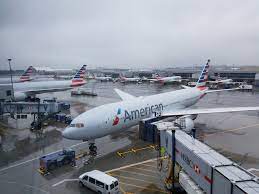
I learned being an American Airlines ConciergeKey member for a short 8 months (sigh) that an airline can offer hospitality. It is something I had only really ever seen in the American Airlines Admirals Club in Austin and flying a handful of first class products on foreign airlines.
The agents in the Austin Admirals Club are proactive. They know about flight delays before they’re posted, talk to operations to learn what to expect (beyond what’s posted about a flight in the computer), and they’ll even add backup flights into reservations before you ask for help. They remember all regular guests by face and name, know who is in their club and on which flight, and get to work – they are proactive.
I’ve had ANA first class flight attendants take an interest in my trip, find out what down time looks like, and make suggestions for their favorite restaurants and activities at my destination.
And nowhere do you feel more ‘taken care of’ than in the Lufthansa First Class Terminal in Frankfurt where from the time you enter the building to the time you’re driven to your aircraft it is someone else’s job to look out for where you need to be, when, and what formalities need to be handled.
I’ve been told by several airline executives that their business is different, they’re focused on safety not hospitality and hotels have it so much easier. But the big hotel chains franchise and don’t even own the experience. Meanwhile airlines like Singapore are able to execute on hospitality without compromising safety.
As a ConciergeKey member it was like the Admirals Club staff in Austin extended out to the entire airline, with welcome texts the morning of a flight (from Washington National), to proactively checking on connections and seats and texting me so that I don’t have to think about those things, to being met (irregularly) at the gate to welcome me to a flight, chit chat prior to boarding, and just say thank you.
That doesn’t quite scale, although parts of it can. For instance a personalized update on your flight, from a ‘person’, updating with where it’s coming from and offering customer service responses by text would be doable.
They could eliminate single agent boarding while still leveraging the automated tools rolled outto reduce gate workload. An agent could thank elites individually, address people by name as they board, cabin crew could address more customers too. Before the pandemic Delta introduced hot towels, welcome drinks, and ‘thank yous’ from flight attendants in international economy.
American is moving to more self service. Chief Commercial Officer Vasu Raja tells employees that the airline will be a 100% digital experience by the end of the year (this will not actually happen). They should do that – but use the freed up staff time not for labor cost cuts but for hospitality.
Delta has red coats. These employees provide extra assistance, problem solving, and complaint resolution. They were introduced in the 1960s, and then eliminated as part of budget cuts in 2005 but brought back gradually starting in mid-2009. To be sure, they aren’t all good – some resemble more the red coat British soldiers in the 18th century – but that’s the idea.
To be sure, not every airline should do this. Spirit and Frontier make money on a low cost model. American will never have their cost structure, so must be a high touch, high revenue airline.
I don’t actually expect this. CEO Robert Isom has told employees not to spend a dollar they do not have to. And he’s said they’ll make money by paying attention to the real estate on the plane the way that Spirit and Frontier do. He’s wrong of course, but I don’t expect them to do the 12 realistic things that would help them improve.
#modernbusinessamerica #modernbusinessnetwork #modernglobalnews #america #business #news #article #economy #startup # money #health #market #stock