
Bolivia Is the Latest South American Nation to Use China’s Yuan for Trade in Challenge to the Dollar

👁️
Post Views: 11,527
Bolivia Is the Latest South American Nation to Use China’s Yuan for Trade in Challenge to the Dollar
Bolivia is using the yuan to pay for imports and exports, becoming the latest country in South America to regularly use the Chinese currency in a small but growing challenge to the hegemony of the U.S. dollar
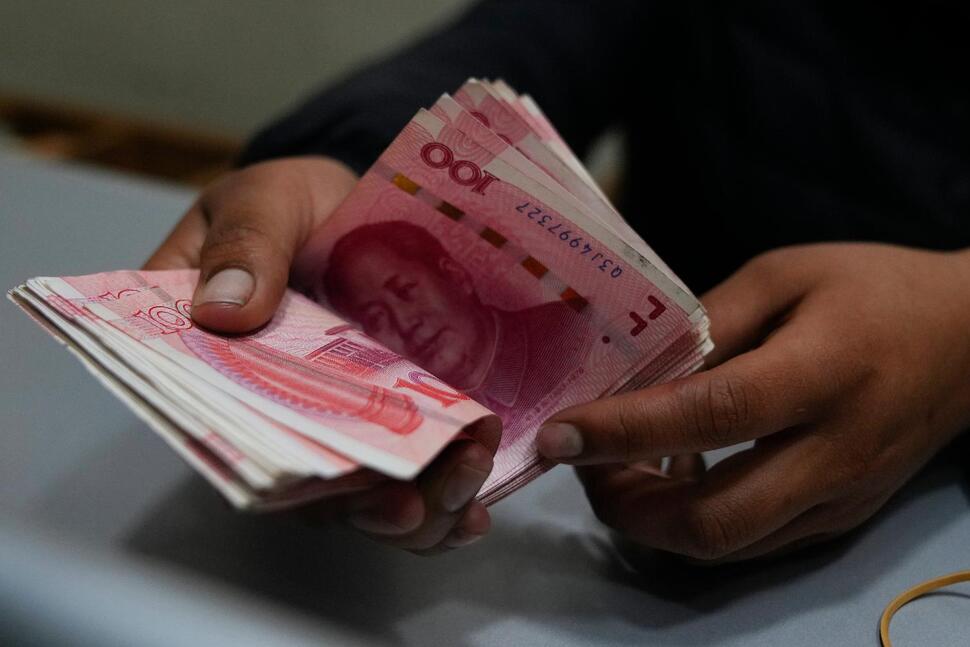
LA PAZ, Bolivia (AP) — Bolivia is now using the yuan to pay for imports and exports, becoming the latest country in South America to regularly use the Chinese currency in a small but growing challenge to the hegemony of the U.S. dollar for international financial transactions in the region.
Between May and July of this year, Bolivia conducted financial operations amounting to 278 million Chinese yuan ($38.7 million), which accounts for 10% of its foreign trade during that period, Economy Minister Marcelo Montenegro said on Thursday.
LA PAZ, Bolivia (AP) — Bolivia is now using the yuan to pay for imports and exports, becoming the latest country in South America to regularly use the Chinese currency in a small but growing challenge to the hegemony of the U.S. dollar for international financial transactions in the region.
Between May and July of this year, Bolivia conducted financial operations amounting to 278 million Chinese yuan ($38.7 million), which accounts for 10% of its foreign trade during that period, Economy Minister Marcelo Montenegro said on Thursday.
LA PAZ, Bolivia (AP) — Bolivia is now using the yuan to pay for imports and exports, becoming the latest country in South America to regularly use the Chinese currency in a small but growing challenge to the hegemony of the U.S. dollar for international financial transactions in the region.
Between May and July of this year, Bolivia conducted financial operations amounting to 278 million Chinese yuan ($38.7 million), which accounts for 10% of its foreign trade during that period, Economy Minister Marcelo Montenegro said on Thursday.
“It is not a long-term solution, and it seems more like an attempt to cover up economic problems,” said José Gabriel Espinoza, an economics professor at Bolivia’s Catholic University.
The manager of the Chamber of Exporters of Bolivia, Marcelo Olguín, dismissed the criticism, characterizing the use of the yuan as merely “an alternative to operate.”

Beyond political considerations, looking for alternatives to the U.S. dollar that has become more expensive amid rising interest rates also makes economic sense, said Rebecca Ray, senior academic researcher at the Boston University Global Development Policy Center.
“They’re all facing the same global macroeconomic conditions, and the most important part of that is the US dollar is really expensive and hard to get a hold of. So there’s basically a global dollar shortage among current central banks,” Ray said. “Central banks everywhere are looking for alternatives.”
Bolivia’s President Luis Arce said earlier this month the Andean country was looking for alternatives amid a “dollar liquidity crisis.”
During a visit to China in April, Brazilian President Luis Inácio Lula da Silva questioned the omnipresence of the U.S. dollar in foreign trade.
“Who was it that decided that the dollar was the currency after the disappearance of the gold standard?” he said.
Beijing is welcoming this new dynamic after years of a concerted effort to push for the yuan to be used more widely on the international stage.
“China clearly wants to challenge the global dominance of the dollar, both for practical and symbolic purposes,” Gedan said.
Now that is starting to be more appealing to more countries.
“China has been wanting to internationalize (its currency) for many years. What is new is that other countries are receptive to the idea because the current situation isn’t sustainable,” Ray said.
Experts agree though that any large-scale shift to the yuan is unlikely in the near future.
“I think there’s a sort of natural limit that most countries will hit,” Myers said. “So many transactions still need to be done using the dollar.”
The “primary limitation here is the fact that the Chinese financial system is still relatively closed,” Myers added.
Gedan added that at least “for now, there is generally more faith in the Fed than in China’s central bankers.”
Politi reported from Buenos Aires, Argentina. Associated Press writer Mauricio Savarese contributed to this report from Sao Paulo, Brazil.
Copyright 2023 The Associated Press. All rights reserved. This material may not be published, broadcast, rewritten or redistributed.
#modernbusinessnetwork #modernusinessindia #modernbusinessgermany #modernbusinessasia #modernbusinesstimes #modernbusinessgulf #modernbusinessworld #modernbusinesseurope #modernbusinessamerica